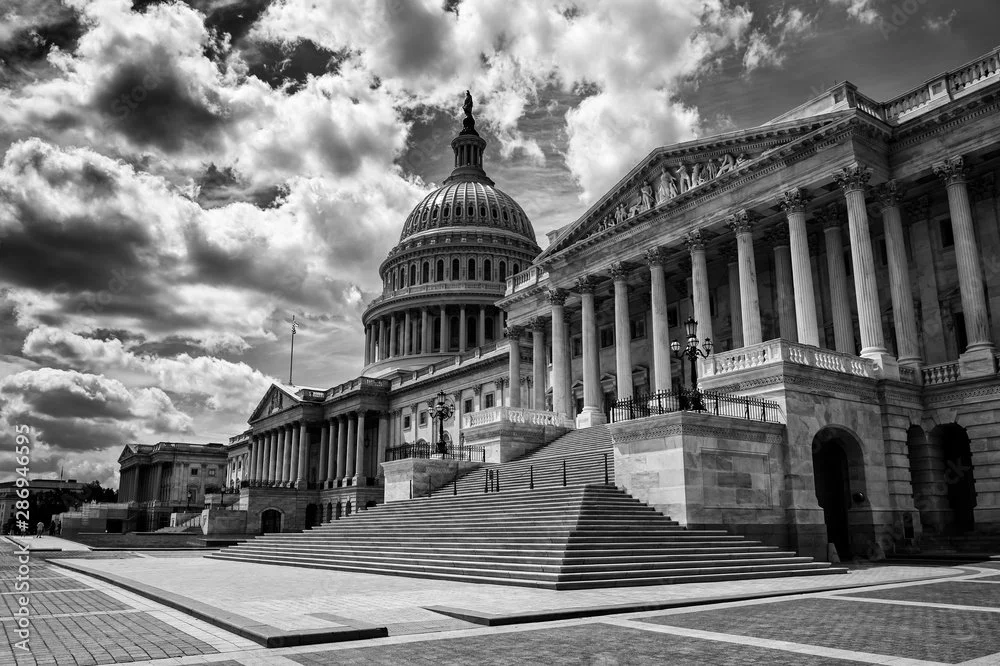
Religious Liberty and the Civil Religion of America
How the concept of religious liberty has been misinterpreted and altered by the state throughout American history.
Religious Liberty and the Civil Religion of America
One of the most prominent examples of civil religion working in our society today is the conflict between religious liberty and the spread of foreign religions in America. While the concept of religious liberty has always existed in America ever since it’s founding, the way religious liberty is implemented in society and the interpretation of what it means to have religious liberty has changed throughout the centuries. America in it’s begining was made up of various Protestant denominations. In spite of these religious denominations having slight doctrinal differences, they all agreed on many of the core tenets of Christianity. In the beginning, many early Americans interpreted the concept of religious liberty as meaning the ability to freely exercise one’s Christian faith, no matter the Protestant denomination, without government interference. Even though these people opposed the idea that the Church could be controlled by the state, they did believe that America was founded by Protestant Christians and that the moral laws of Christianity could influence the laws of the land since the democracy was made up of Protestant Christians. While they did not explicitly create America to be a theocratic Christian nation, like what many modern conservatives state today, we do know that they did create a nation that was intended to have Christian sentiments and possess some form of theism, as stated in the Declaration of Independence which states, “We hold these truths to be self-evident, that all men are created equal, that they are endowed by their Creator with certain unalienable Rights, that among these are Life, Liberty and the pursuit of Happiness”. The civil religion of the people living in America in the 1700’s was likened to a Christian-influenced democracy, where everyone shared the same Christian ethics and way of thinking. According to Kenneth Davis of the Smithsonian magazine in the article America’s True History of Religious Tolerance, many of the early European settlers did not have good relations with Native Americans who refused to convert to Christianity. From these settlers point of view, America was mainly intended for European Christians because they knew that a nation made up of completely different people groups with conflicting worldviews, religions, and cultures would subsequently lead to major conflicts. Flash forward 300 years into the present, and people have completely reinterpreted the concept of what it means to have religious liberty in America. America is never been in such a divided state since it’s conception. Many of these divisions and internal conflicts stem from the people having too many completely different worldviews in a democracy. People today have completely reinterpreted the concept of religious liberty to mean that people could practice any religion, even if the religion advocates for things which we deem as immoral. The civil religion of today’s America is much more secular than in previous times throughout history and it now considers many previously immoral practices as moral. The civil religion of 2026’s America is something the founders could have never imagined and it’s extremely difficult to list the core tenets of America’s civil religion today since Americans have so many different worldviews. This new secular civil religion has had a major impact on our government and the education system. These examples demonstrate civil religion because they are core ideas and ethical teachings that are universally embraced by most of society which control how people act in society and how people treat others around them.
References:
Davis, Kenneth C. America’s True History of Religious Tolerance, Oct. 2010,
www.smithsonianmag.com/history/americas-true-history-of-religious-tolerance-61312684/
“Declaration of Independence: A Transcription.” National Archives and Records
Administration, National Archives and Records Administration,
www.archives.gov/founding-docs/declaration-transcript. Accessed 14 Apr. 2026.